Search This Blog

Tuesday, February 5, 2013

Ahhhhhhhhhhh-Choooey! Texas Roadhouse is Food Allergy Un-friendly

Ahh ahh ahhhhhhhh-choooooooooey!

My dad always sneezes like that. It bugs me some days and others I find it funny. My mom rarely cusses, except for if she is having a sneezing fit. Sailor style.

Meanwhile, back at the blog post.


We are home to one of the newest Texas Roadhouse restaurants and it's been a hit in Manhattan! My father-in-law treated us to it the other day and I enjoyed the bread almost as much as the juicy, tender, well-prepared steak. Something I didn't enjoy? Peanuts.


Texas Roadhouse welcomes guests with a free buffet of peanuts. I obliged, because who doesn't love cracking open a good peanut? My nephew doesn't.


He is severely allergic to peanuts. So allergic, that he convinced my sister to let him just try one plain M&M for the first time in his 5-year-old life, and his face instantly turned about the shade of those delicious steaks Texas Roadhouse keeps in the display cooler! I can't even imagine what walking into that restaurant would do to him!

They have a sign. It says something like, "If you have a peanut allergy, get on down the road." The purpose of this post is not to raise awareness to the restauranteur's stance in a negative light. They offer peanuts and alert guests about the practice. What I do want to do is raise your awareness of the prevalence of food allergies in the US.

Top Food Allergens in the US

Eight foods account for 90% of all food-allergic reactions. They are called the Big Eight and include: milk, eggs, peanuts, tree nuts (e.g., walnuts, almonds, cashews, pistachios, pecans), wheat, soy, fish, and shellfish. These are the ingredients that must be listed on food labels to alert people who might have an allergy. Estimated prevalence of these allergies among the U.S. population:
  • Peanut: 0.6-1.3%
  • Tree nuts: 0.4-0.6%
  • Fish: 0.4%
  • Crustacean shellfish (crab, crayfish, lobster, shrimp): 1.2%
  • All seafood: 0.6% in children and 2.8% in adults
  • Milk and egg: based on data within and obtained outside the United States, this rate is likely to be 1-2% for young children and 0.2-0.4% in the general population. 

Wait, what about gluten allergies? You know, like, five people with that, right?

Most adverse reactions to food are misclassified as a food allergy when it is actually a food intolerance. Allergies cause an immune system reaction, intolerance does not. With allergies you can not handle any amount of the food without having some sort of reaction. The severity is determined by your good old immune system.With an intolerance you can often handle small amounts of the food without having a reaction. 

Want more information?

Food Allergy
Food Intolerance

Enjoy!

Tera

Monday, February 4, 2013

So God Made A Farmer

Silence fell on our small get together with friends last night as a stately and familiar voice rang through the room. We have two Dodges in the driveway, 4 generations of farmers in our family and bellies full of food all because God made a farmer. 

If you missed it, or want to see it again:

BEST SUPER BOWL COMMERCIAL IN RECENT HISTORY

For those of us raised by farmers, we've heard this poem and we grew up on Paul Harvey. I am so glad Dodge paid bookoo bucks to share it with the rest of America. My mom's vying for an encore of "So God Made A Farmer's Wife" and I wish Mr. Harvey were still around to do that for her!

Good Day,

Tera

Friday, February 1, 2013

Quinoa Controversy

It was only a few weeks ago that I learned how to pronounce the word correctly.

Please don't discount this post if you think I'm an idiot for not knowing how to pronounce it. (Friends who don't know, it's keen-wah FYI!)

Before becoming uber popular as of late, quinoa was an obscure grain-like seed you could only buy at wholefood shops in the US. It's kind of in the same family as couscous, and if you're like me, it's only on the food shows you love to watch! Dieticians love this stuff. It's full of protein (14-18% by mass), amino acids and it's gluten free. It's a super crop. People have gone nuts over it!

So, no surprise the price has tripled since 2006. Think about wheat, a crop readily produced in the US, being $9 a bushel - quinoa is almost $340 a ton. Economics teachers of my past go ahead and be proud:
Supply-Demand Graph from Econ 101

Across the globe, quinoa isn't a fad. It's not the new protein source that makes people feel better about their food choices.Our country eats so much quinoa that the people of Ecuador, Peru and Bolivia (countries where quinoa was the staple food source for many years) can no longer afford it.
In Lima, quinoa is now more expensive than chicken.

This isn't the first tale of how a premium fad food source in American damages the country it is produced in. Peruvian asparagus production is concentrated in the Ica region and because of demand for exports, growing this vegetable is threatening the water resources the local people depend on.

The UN has declared 2013 the International Year of Quinoa. So now you have to learn how to pronounce it!

My opinion? We can take these food products, put them in our grocery carts and get all excited about a novel, healthy protein option. That's fine, but don't go home feeling all warm and fuzzy about it. While we are preoccupied with a fad, peasant's can no longer afford a staple grain and are literally starving.

That's not the direction we want our society to head in. We have a lot of people to feed and not all of us are willing to be farmers.

What are your thoughts?

Tera

Thursday, January 31, 2013

No More Paparazzi: NYT Article


Check out this article in the New York Times about how restaurateurs are turning camera shy.

http://www.nytimes.com/2013/01/23/dining/restaurants-turn-camera-shy.html?pagewanted=all&_r=0

Do you take pictures of your food when eating out?

Do you agree with what these managers are implementing?

Wednesday, January 30, 2013

Working at the Cow Wash


275x250.jpgAsk any farmer around and they’ll be the first to tell you they’re not in it for the money.  Some of them have a passion for the outdoors… some of them care about clothing and feeding the world… and you might even find a handful that love animals.  In fact – make that most of them love the animals they raise.  When a farmer goes out at 2 in the morning to pull a baby calf – and then brings the calf into their home to keep it warm until morning - that is pure love.


How far will a farmer go to keep his livestock happy?  As a huge animal lover, animal welfare is very important to me.  Livestock owners often get a lot of slack from the media for the treatment of animals involved in production agriculture.  There is controversy over naturally fed cattle, pigs raised in pens vs. pastures, and cage sizes for chickens – the list goes on and on.  Now I could really care less if the cheeseburger I ate was once “organically” fed, but something that is important to me is the quality of life the animals had on the farm.
 275x250.jpg
So back to my question: how far will a farmer go to enhance the quality of life for his or her livestock?  An article posted on our first year vet school message board caught my attention.  There is now a machine that washes your cows, similar to a car wash.  And over 30,000 of these Swedish machines have already been sold.  That’s a lot of clean dairy cows.  If the “cow-wash” makes the cows happy, they produce more milk – now I’d say that’s a win-win situation for all.  Check it out for yourself!


Enjoy!
Alex

Tuesday, January 29, 2013

FOOOOOOOD FIGHHHHT!

Ok, well maybe not a literal Lunch Lady Land,  Sloppy Joe smack down. The food fight I'm talking about is the one we're all familiar with: Organic vs Conventional, Whole Foods vs Walmart, HSUS vs Animal Ag.  It seems like all of these food foes are destined to be locked in an eternal struggle for the right to trigger satiety. But does it really have to be that way? One champion of the food gospel says no.

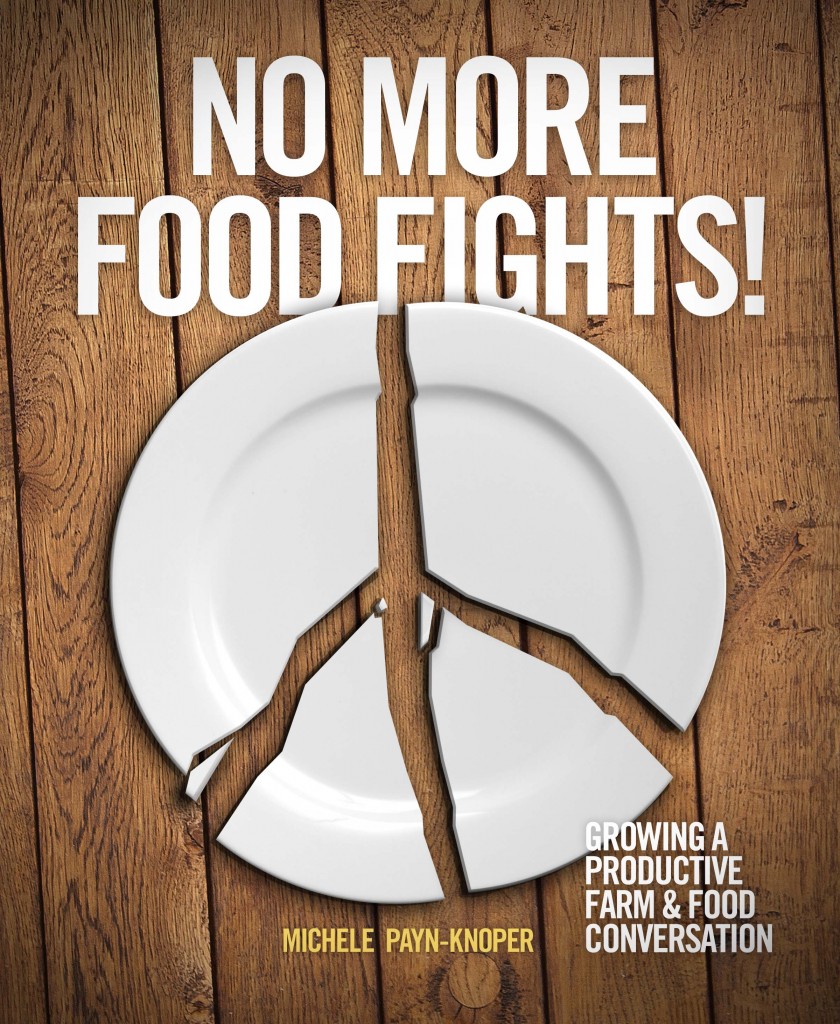
Michelle Payn-Knoper's new book, No More Food Fights!, seeks to finally "reach across the plate and shake hands" and inspire constructive communication rather than hurl rotten non-GMO tomatoes.  Over the past several years MPK has established herself one of North America's favorite foodies. Her tireless work to advocate for both the American food consumer and farmer has resulted in what is sure to be an inestimable amount of positive impacts and learning experiences for people on both sides of the great plate debate.

To hear what Michelle has to say about her new book, check out a recent Q&A with Chuck Jolley or visit her website. 

 No More Food Fights!  will definitely be home run for anyone who eats. The first edition is slated to hit the shelves February 14th, just in time for a late Valentines Day gift.


Peace!


DJ


No one can worship God or love his neighbor on an empty stomach - Woodrow Wilson

Monday, January 28, 2013

Japan to Ease Beef Import Terms

Big news in the ag industry today. Japan has changed the terms and conditions for which it imports beef from the United States. It's a big deal for ranchers and farmers, but also of interest to consumers!

This is a great article in Drovers about the new deal:
http://www.cattlenetwork.com/cattle-news/latest/Japan-agrees-to-ease-beef-import-rules-188663751.html

This is a great blog post from The Hill:
http://thehill.com/blogs/on-the-money/1005-trade/279577-us-japan-strike-new-beef-trade-deal

Japan is the largest importer of US beef in Asia.

Japan will now permit the import of beef from cattle less than 30* months of age. *Previously 20

This will inevitably boost the bottom line for American Agriculture and help set another record year for agricultural exports.

This is a true testament to the work that has been done in the industry to provide safe and wholesome beef to consumers. Japan stopped importing beef from cattle that were up to 30 months in age after a positive Bovine Spongiform Encephalopathy (BSE) case was found in the US back in 2003.

Enjoy!

Tera

LinkWithin

Related Posts with Thumbnails