Search This Blog

Friday, October 15, 2010

Football and Food

If you missed last night's game K-State beat KU 59-7 in the sunflower state showdown and I can't hide my excitement. So, I decided not to fight it and instead talk about tying my passion for agriculture to my love for K-State. For example, this is my favorite T-shirt, which I happen to be wearing at a K-State football tailgate earlier this year.


K-State's Collegiate Cattlewomen sell the "I heart Beef" shirts for $10 a piece. Proceeds go to CCW activities and beef promotions. You can order one yourself by emailing CCW President Callie Jo Williams at calliejw@ksu.edu.

CCW also sells these "Eat Beef" license plates.


You can learn more about ordering plates here.

Finally, I'm going to share a picture of some K-State students at a previous K-State/KU football game.


Now I'm not advocating for making fun of people's weight, but I would like you to remember wherever you go and whatever you do, your activities are fueled by food provided by farmers and ranchers.

Food is a big part of football for most fans - whether it be your signature dip or something special on the grill. So whatever your team of choice, take a chance before your next game to stop and think about where the pre-game burgers, beer, chips and salsa came from and thank the food producers who help fuel your life.

Best,
Chelsea

Wednesday, October 13, 2010

Meet a Farmer


We live in a society that is increasingly urban and suburban. In fact, the average person is two generations removed from the farm. However, there is research that indactes people consider farmers and ranchers reliable sources of information about food and food production.

The problem is less and less people have a personal connection with a farmer or rancher. In that spirit, I decided to share some of my favorite ways you can connect with real producers online. This is just a sampling. Many farmers and ranchers are active online. Feel free to share your favorite producer information sources too.

Blogs :
Debbie Lyons-Blythe blogs at “Life on a Kansas Cattle Ranch” about raising cattle and kids in central Kansas.

South Dakota rancher Troy Hadrick share about his ranch and his take on current events in agriculture in his blog “Advocates for Agriculture.”

Facebook :
Kansas rancher Mark Smith shares about his operation – often through fabulous pictures – on the facebook fan page for Pleasant Valley Ranch.

YouTube:
Kansas Farm Bureau’s YouTube channel offers profiles of various Kansas farmers and ranchers.

Twitter :
Many farmers and ranchers are active on Twitter. I recommend following California farmer and rancher Jeff Fowle @JeffFowle, Ohio farmer Mike Haley @farmerhaley, California dairy farmer @RayLinDairy and Kansas farmer Darin Grimm @kansasfarmer.

If you’re itching for an in-person tour of a farm or ranch, search the Internet to see if there is a program in your area. If not, local and state Farm Bureaus and Livestock Associations also may be able to get you in touch with a farmer or rancher willing to give a tour. You’d be surprised how willing many producers are to open up the farm gate and share what they do.

Best,
Chelsea

Monday, October 11, 2010

Link to watch Temple lecture online

Temple Grandin's K-State lecture will be broadcast live online!

As you may already know, Temple Grandin is speaking in Forum Hall of the K-State Union at 7 PM on November 9th. We'd love to have anyone who can come join us for the lecture. Plan on arrive early as seating will be limited. For those who can't make the trip to Manhattan, you can also watch the lecture live at this link: http://ome.ksu.edu/webcast/bci/blog/index.html. Feel free to spread the word and share this link with others who might be interested in watching the lecture.

Best,
Chelsea

Wednesday, October 6, 2010

Foodie Feature: Milo and Oats (not Otis)

So it’s a well known fact that this wheat:


can be made into this bread -->


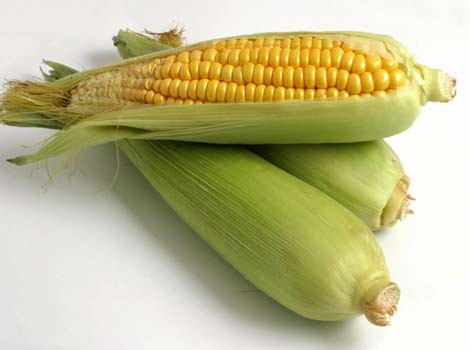
It’s also generally accepted that this corn is a key ingredient in these tortillas
<--                                         -->
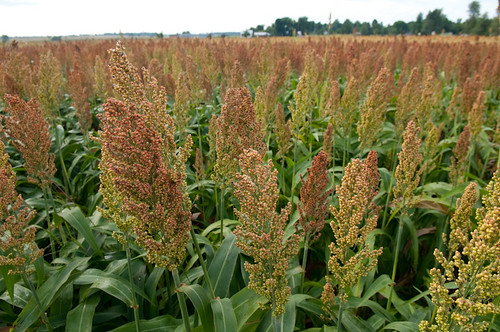
But do you know what this is and where it is used?

This crop in this picture is milo, also known as sorghum.   It's a very drought and heat tolerant grain that is a key component of some livestock feeds, sorghum molasses and some adult beverages.  Sorghum is an used as a foodgrain across the globe but in many regions of the world, such as South America, India and Africa, sorghum is a staple in everyday diets.  Did you know that sorghum is the 5th most important cereal crop grown in the world?!  Sorghum is also highly palatable to livestock and is therefore used in the U.S. primarily as livestock feed.  It has more protein and fat than corn and doesn't decrease productivity.

Another important grain that rarely gets attention are oats.  This is what they look like on the stalk, prior to harvest.
But you probably see them more often looking like this -->
Did you know there are lots of other uses for oats?  Oats can be made into flour, used in cookies, mixed into horse and livestock feed and are commonly found in most granola bars.  Great Britain often uses oats in breweries when making beer.  Oat protein is nearly equivalent in quality to soy protein, which has been shown by the World Health Organization to be equal to meat, milk, and egg protein.  Oats are also believed to lower bad cholesterol and possibly reduce the risk of heart disease.  Oats provide the body with a ton of healthy benefits!

Sorghum/milo and oats are two grains that don't get very much well deserved attention.  Next time you're in the grocery store pick up some heart healthy granola bars and some sorghum molasses!

For more information on grains and crops visit http://www.ksgrains.com/

Until next time,
~Buzzard~


Monday, October 4, 2010

A Month Full of Fall Foods!

Did you know that October is the National Month for 22 food related items?!  Not only that but many of the celebrated foods can be used together to make some delicious recipes. For example...

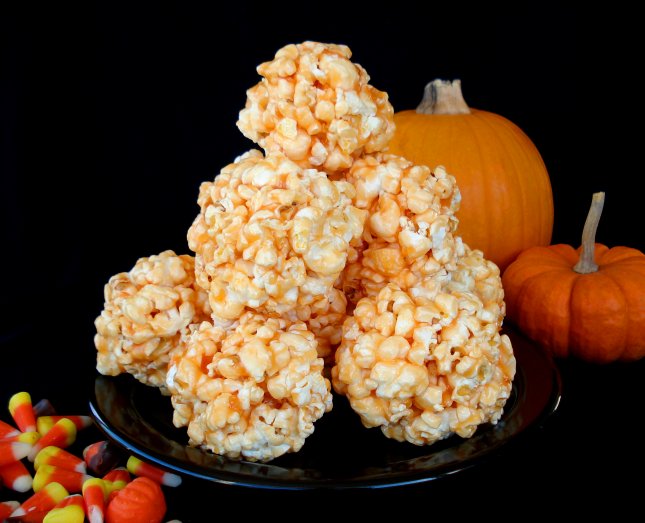
October is National Caramel Month, National Popcorn Month, National Dessert Month -- I don't think I need to explain myself any further on this one.  Check out this fall favorite.

Moving on.... October is National Pork Month, National Apple Month, National Cookie Month -- whip up this delicious dish, Apple-Maple Stuffed Pork Chops, and then chow down on some of these wonderful cookies.

There are tons of opportunities for food experimentation in October.  This is a complete list of food related topics October is nationally recognized for!


  • Celebrate Sun Dried Tomatoes Month


  • Cook Book Month


  • Gourmet Adventures Month


  • National Apple Month (Actually 3 months, Sept, Oct & Nov)


  • National Applejack Month


  • National Caramel Month


  • National Chili Month


  • National Cookie Month


  • National Country Ham Month


  • National Dessert Month


  • National Eat Better; Eat Together Month


  • National Health Care Food Service Month


  • National Pasta Month


  • National Pickled Peppers Month


  • National Pizza Month


  • National Popcorn Poppin' Month


  • National Pork Month


  • National Pretzel Month


  • National Restaurant Hospitality Month


  • National Seafood Month


  • National Spinach-Lovers' Month


  • Vegetarian Awareness Month


  • I will be very heavily supporting the pork, apple, pizza, pasta and apple industries this month! What are you favorites? Happy eating!

    Until next time,
    ~Buzzard~

    Saturday, October 2, 2010

    Temple Grandin coming to K-State

    Food For Thought is bringing Dr. Temple Grandin to Kansas State next month and I can hardly wait!!!

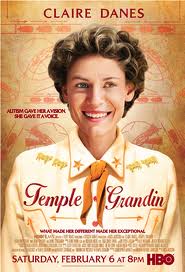
    Temple will be speaking to a campus and community wide audience on November 9th at 7 PM in the Union. Everyone is welcome. This is an especially exciting time to be hosting Temple because an HBO movie on her life recently won 7 Emmy Awards.


    Temple didn't talk until she was three and a half years old. In 1950, she was diagnosed with autism and her parents were told she should be institutionalized. Instead she developed her ability to think in pictures and see situations through the perspective of animals into a successful career as a livestock-handling equipment designer. She has now designed the facilities in which half the cattle are handled in the United States. Her first book, “Emergence: Labeled Autistic” stunned the world because, until its publication, most professionals and parents assumed that an autism diagnosis was virtually a death sentence to achievement or productivity in life.


    Temple speaks around the world on both autism and cattle handling. At every Future Horizons conference on autism, the audience rates her presentation as 10+. Temple’s current bestselling book on autism is “The Way I See It: A Personal Look at Autism and Asperger’s.” In addition to publishing 7 books Dr. Grandin has authored more than 400 articles in scientific journals and livestock periodicals.


    Best,

    Chelsea

    Tuesday, September 28, 2010

    Factory Farming will Feed the World


    I don’t like the term “factory farming”. I frankly don’t think it exists. In my mind it is nothing more than a simple-minded attempt to abolish the way of life 2% of the US population enjoy passing down through generations – kind of like picking a fight with a kindergartener at our age. I just used it in the title to catch your attention. Did my gimmick work? Keep reading.

    A mere 2% of our population produces safe, nutritious and surplus food for our country and the world. The topic of hunger is one that hits everyone hard. Somewhere in the ranks of 1 billion people, as of 2009, are currently going about life hungry. These people walk the streets in countries around the world, including the US and is a widespread crisis.

    World leaders look to agriculture to solve these problems. While agriculture in the US is dealing with anti-agriculture activists on a daily basis and spending millions of dollars to promote the positives of the industry to US consumers, the rest of the world is looking to agriculture to solve the immense hunger problem. Ag producers are trying to introduce the American consumer to the face of farmer or rancher while dispelling myths about factory farming and large-scale mechanized food production. Agriculture is fighting a different battle in the US, while the rest of the world needs it to help fight hunger.

    At a recent United Nations meeting, the Summit on the Millennium Development Goals in New York, James Borel, Dupont executive vice president, hammered this thought home. “Agriculture is the primary driver to abate hunger and reduce poverty. Throughout history, agriculture prosperity has led to successful economies,” he comments.

    Wait, wasn’t Dupont just being bashed in US popular media for biotechnology practices in crop production? Biotechnology, which undoubtedly only benefits the factory farms and evil, smoke-out-the-ears caricature of ‘farmers’ who run them. Yeah, that’s how the video went.

    Dupont and other US crop seed companies have created efficient, sustainable, drought and insect resistant seeds through biotechnology. But we can’t just take our biotechnology into a developing country, teach farmers how to plant our more efficient biotech crops, fly back to the US and celebrate because we solved the problem. Those farmers will see success in the first crop. Yields will be tremendous, but there will be no infrastructure to support the surplus. Next year they will be frustrated, we won’t provide them with biotech seeds again, and they will return to how it used to be.

    The point? Solving hunger and increasing overall food production around the world is a complex problem that can’t be solved with one answer. I believe what Borel says in that agriculture is in the answer, but I don’t think it is THE answer. We can battle hunger with an intricate plan including economic and agricultural development around the world.


    Just my two cents,


    Tera Rooney

    LinkWithin

    Related Posts with Thumbnails