Search This Blog

Showing posts with label agriculture. Show all posts

Thursday, June 4, 2015

The Good and The Bad I Learned From Raising a 4-H Animal

I stumbled across this article on my newsfeed the other day, and thought as a person who has been through the 4-H program for nine years and continues to help others be involved, I would share my perspective of raising a 4-H project.

A few key words come to mind when I look back at the years I spent in 4-H: Responsibility, Respect, Trust, Hardship. All of these stem from the education I got from my 4-H project.
A boy waters his 4-H pigs
This young boy is watering his pigs
Responsibility. Raising a hog, sheep or calf from a young age takes an everyday commitment. These animals have to be fed and watered, have their pens cleaned on a daily basis, and washed by hand (sometimes twice or three times). For me, this meant heading to the barn before school, before any of my classmates were up, and tending to my beloved animals. I can still remember the days of hiking up the hill to the barn in the dark and rain with my sister to feed our steers, and give them a scratch as they came to the fence. 

A girl holds her baby piglet
We are our animals' caretakers and they trust us to do what is right.
Trust. I learned that with each year, you have to form a bond with your animal. Pigs may be one of the smartest animals I know, and it takes hours upon hours to build a relationship with them. As a little girl, I would sit in the shavings in the pen as the piglets began to chew on my boots. As the relationship grew, I would take them on walks around the field, training them for the show ring. By the time the show rolls around, there is a true partnership that exists between you and your pig. They trust you to lead them in the right direction, and vice versa.

A sow feeds a new litter of piglets
This sow has a lot of mouths to feed!
Hardship. For every proud moment that you share with these animals, there are equally as many hardships. I remember my first litter of piglets when I was 5 years old. I was so excited to see 12 little piglets running around. But I also got to see Mother Nature’s work as well. Two of the piglets were squished by the sow and I remember the helpless feeling as there was nothing I could do to save them. That was my first lesson in  “letting nature take its course.” Another time a neighbor brought a bummer lamb over for us to bottle-feed.  Nothing makes a little girl happier than having a baby lamb to bottle feed in her house. But once again, after a week of caring for the small animal, its body gave up on it one day. At a very young age I had experienced death of an animal I cared deeply for.

I will admit that the author of the article was right about one thing. We are forced to harden a piece of our hearts.  But from that comes growth and learning.  What can we do in the future to prevent these hardships? What has to occur due to nature? However, I also realize the amount of work that goes in to producing a quality product that will feed a family. I understand where my food comes from.

Through my time in 4-H my animals taught me more about real life than a classroom ever has. Yes, I will admit getting that champion ribbon is always fun. But it’s the life skills of responsibility, trust and hardship that will continue to drive my passion for agriculture, and a passion to teach other youth the same lessons as well.

Until next time,
Kiah

Wednesday, December 3, 2014

Bruce Vincent Lecture Now Online!

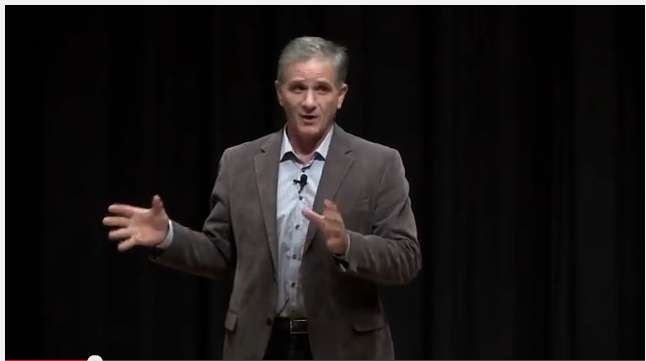
Bruce Vincent speaking at K-State as part of the Upson Lecture Series
If you weren't able to attend the Upson Lecture Series event featuring Bruce Vincent, which is highly unfortunate, but were still wanting to hear his message, I have great news for you!

The lecture is now available online on the Food For Thought YouTube channel - you can click over there and watch or you can view it below.

Thanks to everyone who helped make this event happen - specifically the K-State College of Veterinary Medicine classes of 1962 and 1966 for fully endowing the Upson Lecture Series. Sincere gratitude is also extended to Frontier Farm Credit and American Ag Credit for their generous role in bringing Bruce to K-State!


Wednesday, November 5, 2014

Get Those Hands Dirty! Bruce Vincent to Speak at K-State for Upson Lecture Series

Do you like Mike Rowe's Dirty Jobs? Well, get ready because you're going to love the next installment of the Upson Lecture Series!

This coming Monday, November 10 in the K-State Student Union in Forum Hall, Bruce Vincent a third-generation logger from Libby, Montana will be speaking about getting involved in careers that get your hands dirty and the thought process and attitude behind producing goods that stimulate the economy and create a healthy environment.


Think about it, without farmers and the tough, dirty jobs they do we would not eat. Without coal miners or linesman/women we wouldn't have electricity. There is a whole world out there that is driven by hardworking men and women who are committed to using their hands, in addition to their heads, to keep the gears grinding.

Please make plans to join Food For Thought on Monday, November 10 at 7 pm in the K-State Student Union Forum Hall as Bruce Vincent presents "Wish Vision There is Hope -- How NOT to be the Career of Last Choice." It will be an eye-opening lecture and hopefully one that sparks you to institute change.

This installment of the Upson Lecture Series is partially funded with generous support from Frontier Farm Credit and American Ag Credit. Additionally, the Upson Lecture Series has now been fully endowed by the K-State Veterinary Medicine Classes of 1962 and 1966. We are excited about the amazingly generous support of these groups and look forward to bringing many more inspiring and intelligent speakers to KSU for future ULS events!

See you there!


Wednesday, October 8, 2014

Agriculture's Employment Problems


The topic of immigration has been a hot button over the past decade. The media has jumped on this conversation, or heated debate may be a better term to describe it, but they have ignored the dysfunction in the legal non-immigrant visa programs that the agriculture sector so heavily relies on. I have been exposed to the problem in the status-quo because my family is actively experiencing these problems.

2014 Harvest Crew: 5 H-2A visas & 9 J-1 visa  
My family has a farm and a custom harvesting operation (Frederick Harvesting) where we hire approximately 22 seasonal employees for 8 months of the year to help with the preparation of the harvest season and then be either a combine operator or truck driver for both the summer and fall seasons. Of the 22 seasonal employees about half of the crew is American and the other half is foreign. Our foreign employees are from countries you wouldn't normally think that the agricultural sector relies on; England, Ireland, Wales, Scotland, New Zealand, and Australia mainly. We hire these men their first year on a J-1 visa.  The J-1 visa is described as, "The Exchange Visitor (J) non-immigrant visa category is for individuals approved to participate in work-and study-based exchange visitor programs" according to http://j1visa.state.gov/basics/. After the workers come through this visa, if they loved their work and want to come back and work for us for the next season they must come back through the H-2A visa program. This is where the dysfunction happens.

The H-2A visa program is described by the U.S Citizen and Immigration Services as, "The H-2A program allows U.S. employers or U.S. agents who meet specific regulatory requirements to bring foreign nationals to the United States to fill temporary agricultural jobs." (http://www.uscis.gov/working-united-states/temporary-workers/h-2a-agricultural-workers/h-2a-temporary-agricultural-workers)

2010 crew: 3 H-2A visas, 8 J-1 visas
The root of the problem is that Americans don't want to hold these jobs and there is a line of young skilled foreigners that want these jobs. The H-2 visa program is a cycle of dysfunction and frustration for the employer and the foreign employee. The employee works and is trained on the job for 8 months, has to go to their home country for 4 months with uncertainty if they will even be accepted to the visa program for the next year. This makes for an uncertain and unstable labor force for the employer. When talking to my dad who deals with these problems hands on he said, "The program needs to be a more reliable system so that the employee and I don't have to play a waiting game." He went on to point out that these workers are legal and paying taxes in this country to work here. Something clearly must change.

The Ag sector is voicing that they want change. A logical fix that is being discussed in D.C. is to grant an H-2A visa for a 3-year period with the worker going home during the off season. Another one of the major changes that is being lobbied for is for the H-2A visa program is to include sheepherders and dairy workers. The dairy industry is running into the same problem; not enough American workers that want to do the job.


Karly Frederick
Ag-business Major

Wednesday, May 7, 2014

USDA Ag Census - Geeking Out Over Agriculture

Big ranches. Small farms. Community supported agriculture programs. All of these are outlets where food is planted and raised for American citizens and, in many cases, the world.

But unless you live near a rural community, it can be really difficult to find a farm or ranch to visit in order to learn more about the food you eat, the farms that produce it and more importantly, the farmers and ranchers raising and producing it.

To make the vast endeavor of learning about your food a bit more manageable, the United States Department of Agriculture (USDA) has recently published the results of the 2012 Ag Census. Yes, I am aware it is 2014 but the USDA collects, combines and categorizes millions and millions of data points so it takes a while to make it easy to share.

A new facet to the Ag Census data are the easy-to-read infographics. Generally, if an individual wanted to look up how many operations in the U.S. specialized in beef cattle (619,000 according to the census), that person would have to scroll through pages of reports, Excel files and other documents looking for the exact right piece of information. However, this year the USDA has created some really nifty infographics that highlight some important and key components of American agriculture.

Infographics tell the story of the 2012 Ag Census
Click to enlarge
Source: USDA Ag Census 
You can see in the infographic above many answers to questions regarding current agriculture issues. For example, more than 57,000 farms or ranches employ the use of alternative energy sources (wind, water, etc). How cool is that?! Farmers and ranchers using alternative energy to produce food for the world in an environmentally sustainable way!
 
Another fact that isn't necessarily cool but provides some insight into the costs behind farming: Farmers spent almost $20 BILLION on seed in 2012, which is a 66% increase from 2007.
 
There is also a tool called Quick Stats, which allows you to build a specific query. For example, if you wanted to look up the average age of the principal operator on California farms that have only one owner/operator, you could do that with a few clicks [the answer to that query is 60.7 years old, btw].

I hope you'll take the time to geek out over these cool tools that USDA has developed - I have been playing with the Quick Stats function a lot and the infographics page says that new inforgraphics will be added in the future, so I am checking that page often!

What are some questions you have about ag that you are going to research using the USDA data?

Until next time,
~ Buzzard ~



Monday, April 21, 2014

Upson Lecture Series: Lee Borck and Entrepreneurship

 
Food For Thought is excited to announce our next speaker in the Upson Lecture Series!
 
Mr. Lee Borck, Kansas business owner and former president of the Kansas Livestock Association, will be speaking about the importance of building strong relationships and maintaining an entrepreneurial spirit on K-State campus next Monday.
 
Borck's message relates to a wide demographic - students, faculty and community members alike will benefit from his advice and experience.
 
If you are in the Manhattan area, please join Food For Thought at the K-State Vet School in Frick Auditorium on April 28 at 7 pm. The event is free and open to the public so we hope to see you there!


Wednesday, March 26, 2014

Farming Practices... And Why We Do Them


Hey everybody, my name’s Bruce Figger and I’m from a small town in central Kansas called Hudson.

I’m currently a 2nd year veterinary student at Kansas State and I did my undergraduate work at Fort Hays State where I majored in Animal Science.  My family has a farm where we grow wheat, milo, and alfalfa in addition to raising Angus cattle.  In my spare time I like playing guitar, going to the lake, and just hanging out with my friends.

I have been involved with agriculture pretty much all my life.  Unfortunately not everyone has had the same opportunities to be involved with food production as I have.  The gap between food producers and consumers is growing and I am excited to be part of what Food For Thought is doing to bridge that gap.    

I recently came across an article on Huffington Post titled “9 Facts About Factory Farming that will Break Your Heart.”  This article was full of misconceptions and scare tactics about how terrible conditions are at these “factory farms.”  Now, I could go through these so-called scary facts about food production one-by-one and explain why these practices are performed or how they’ve been over exaggerated for a good news story (that was sponsored in partnership with Chipotle… riddle me that), but since I was home on spring break last week I decided to take a look around our family farm and see what I could find that, if spun the wrong way, could be seen as heartbreaking.

So here are four practices on a non-factory farm that could break your heart, and why we do them:


#1 We Confine Our Cattle… Sometimes:

Everybody knows that cows eat grass and grass grows for free, so why would anybody need to keep them locked in a pen?  Multiple reasons exist for this practice.  One of the biggest ones is to feed cattle a specific ration so that they can gain weight as efficiently as possible to make it to slaughter weight using as few resources as necessary, this is the idea behind feedlots.  But cow-calf producers occasionally keep their cattle in pens too.
 
The pictures to the left show two groups of cattle in dry lots.  The group in the top picture is heifers that are getting ready to give birth to their first calves, they will join the group in the bottom picture after we make sure they have delivered their calves safely and everyone is healthy.  They will all go to pasture once the grass is ready.  We keep them in confinement to make sure they are healthy, have access to good feed throughout the winter, and to catch them if they need help calving, which brings me to...
 

#2 We use Chains to Deliver Calves… When Necessary:

This is a picture of my dad and me helping a cow who was having trouble delivering her calf.  This may seem unnatural, after all there are chains involved.  But sometimes during calving, difficulties can occur that require assistance, and these are big, slippery calves, so we use small chains that are like a choke collar for dogs.  We put the chains on the end of the calf’s legs near the feet to pull the calf out.  This practice is far from the norm for births, most cattle have no trouble delivering calves all by themselves.  But these calves aren’t out of the woods yet because...


#3: We Pierce Ears of Calves at Very Young Ages:

This is my brother tagging a calf that was born today, these tags have a sharp point that pokes through the cartilage of the ear then bends down to hang visibly from the ear.  This can be painful to the calf, no way to deny that.  Also it can be stressful to the calf and its mother because for all they know, we are attacking.  Pain and stress are things we try to avoid in our livestock, but in a procedure like this the benefits outweigh the costs by a long shot.  Tagging takes less than a minute and results in a calf that can be identified if it gets lost or sick or has to be moved to a new pasture.  A few seconds of pain and stress makes it possible to take care of these animals on an individual level.


#4 We Feed Antibiotics to Our Cattle to Enhance Their Growth:

To the right, is another picture of my brother hard at work putting out mineral supplement to our yearling calves on wheat pasture.  This mineral contains Monensin, which is an antibiotic in the category known as ionophores.  Ionophores make up about 30% of the antibiotics sold for use in animal medicine.  They kill a specific group of bacteria in the rumen (a compartment of cattle’s stomachs where fermentation takes place).  These bacteria produce methane, which the cattle belch off.  Killing these bacteria lowers the amount of methane produced and allows other microorganisms to make products cattle can absorb and use to grow.  Ionophores are not used in human medicine at all, so using them in cattle won’t lead to development of resistant bacteria that could harm people. 


So there you have it, folks, four common practices that could be seen as cruel or unnecessary if spun the wrong way, and that’s just in two days.  I’ll keep an eye out for more, but until then if you see or hear of something that concerns you about where your food comes from, ask a farmer. 


Eat Beef,

Bruce Figger


Sunday, March 23, 2014

Calving Season

Hello everybody! My name is Jacob Hagenmaier, and I am a veterinary medicine student at Kansas State University. I am very passionate about providing a safe, wholesome food supply as well as the great stories people involved in agriculture have to tell. One such story is calving season. Right now is the end of our spring break, and while many students across the nation spent the last week enjoying sandy beaches or snow covered mountains as the perfect getaway, my break was spent in the beautiful Flint Hills of Northeast Kansas on our family ranch. March is a busy time for many ranchers, because that is when their cows are due to calve. Calving season varies within different operations, but early fall and spring tend to be the most common. Calving season is a very intense and strenuous time for cattle ranchers. Some nights, not a wink is spent sleeping due to continually checking on the pregnant females and assisting with births if needed. Still, calving season is one of the most rewarding and fulfilling parts of being involved in beef production. All the hard work spent feeding, delivering calves, putting down straw for bedding, and monitoring herd health is well worth it to see newborn calves bursting with energy and ready to go to grass around May!


Since our herd consist of predominately cattle that are 100% black, I get especially excited to see a calf born with a little bit of color.  The bull calf pictured above tends to be my favorite this year because of the "Joker-like" face pattern -- google "Joker from Batman" and you'll see what I mean! Within 12 hours of birth, all calves on our operation are given a shot that contains minerals to boost their immune system, a pill with antibodies against causes of scours (Bovine term for diarrhea), and a tag which identifies their mother. Around mid April to the first of May, the newborn calves and their mothers will be taken to pasture to feast on the fresh grass that comes with spring.


That's all for now... I better get back to studying :/

Best,
Jacob


Thursday, March 20, 2014

New Member Profile: Tonia Traas


Hey all!  My name is Tonia Traas and I am currently a second-year veterinary student at Kansas State University.

I am originally from a small town in Wisconsin called Waunakee, and graduated with a bachelor’s degree in Animal Science from UW-Madison. Although I didn’t grow up in a farming family, I worked on a dairy during my undergrad years, and have always been passionate about the agriculture industry.

Moving to Kansas has only fueled my passion for the beef industry and keeps me motivated to become a mixed animal practitioner in a rural area. There is no place I would rather be than with my arm in a cow :) 

I am excited to be able to be a part of Food for Thought and use my own voice to make a difference in agriculture and how people view the field that we are so passionate about! 

-Tonia

Friday, March 14, 2014

The Great American Wheat Harvest

Check out this phenomenal short documentary about family farming and wheat harvest crews during a summer of wheat harvest - called The Great American Wheat Harvest.


Tuesday, March 4, 2014

Chipotle: Biting the Hand that Feeds It?

As of 2012, 81% of Americans were on the internet.  That means 81% of Americans are constantly being bombarded with informative - and misleading - information from Facebook, Twitter, and notably, a particular Hulu web series.   Chipotle Mexican Grill, has taken advantage of the world wide web to broadcast their web series, “Farmed and Dangerous” via Hulu.

While Chipotle uses the slogan, "Food With Integrity," I find the corporation to actually be quite lacking in integrity.  They created this series to attack modern-day “industrial” farming, while showing that local, natural and organic family farms are the only way to go.  While there is absolutely nothing wrong with supporting local and organic markets, it is wrong for Chipotle to mislead consumers with myths of modern farming.

Check out this recent guest editorial in response to Chipotle's attack on modern agriculture featured in K-State's student newspaper, the Collegian.  The contributor, Nathan Peterson, is a sophomore in agricultural technology management at K-State and is well known in the agriculture community for being one of the Peterson Farm Bros, from the Peterson Farm Bros YouTube videos.

http://www.kstatecollegian.com/2014/02/28/chipotle-misleads-its-consumers-bites-hand-that-feeds-it/

-Alex

Thursday, February 20, 2014

Dairy Carrie vs. HSUS

Aaaaand we're back - after a brief hiatus from the blog we're back in full force!

Donations to HSUS
Picture from dairycarrie.com
As a vet student, and someone who cares a ridiculous amount about the well-being of animals, I am constantly outraged by the Humane Society of the United States misleading Americans.  Let's get one thing straight, when you donate to HSUS you are in no way benefiting your local animal shelter and helping animals in need - you're contributing to a power (and money) hungry organization that lobbies against agriculture.


Recently, Wayne Pacelle, the President and CEO of HSUS, wrote an open letter to agriculture journalists and leaders.  This letter is just as misleading as the sappy commercials I see on TV.  Blogger, Dairy Carrie, has such a phenomenal response to this - I had to share.  Enjoy!

http://dairycarrie.com/2014/02/10/dear-wayne-pacelle/

-Alex

Thursday, September 5, 2013

Modern Farming

In a country like Japan, space is everything.  So how do they find a balance between rural farm land and big city skyscrapers?  They combine them and make a building that doubles as a farm.  From vegetables, to rice, to flowers - this building has it all.  What do you think?  Is this the "farm of the future?"


-Alex

Wednesday, March 6, 2013

Here is a link to a TED (Technology, Entertainment, and Design) video talking about the environmental conditions the world is facing and how this will affect the production of livestock.

Allan Savory is an environmentalist that has spent his entire work evaluating how livestock are bad for the planet and are part of the reasons for climate change and desertification. However after evaluating all of his work, Allan now says that livestock are the solution for climate change and determining ways to fight hunger, poverty, and violence across the world.

Take a few minutes and listen to the video which can be found here.


Until next time,

Miles Theurer

Sunday, February 17, 2013

Fields of Gold

You'll remember me when the west wind moves...........Upon the fields of barley
You can tell the sun in his jealous sky........................When we walked in fields of gold

Picturesque field of gold.

This blog post was inspired by a song playing on my Pandora while I was supposed to be studying. My family doesn't grow barley, but I thought I'd do a little research on the crop because that song is just so good!

Barley: cereal grain grown in both irrigated and dry land environments. 

Season: barley is a short-season crop, 27 states in the US produce Barley.

North Dakota: state that grows the most barley in the US.

4th Place: barley is the fourth largest grain crop after wheat, rice and corn. 

320 million: average number of bushels produced in the US between 1994 and 2003. 

Animal feed: number one commercial use for the crop (51%), followed by malt (44%).

Resources: Barley Foods, National Barley Growers Association

Barley ready for harvest.


Enjoy, 
Tera


Tuesday, November 20, 2012

Dust to Dust


 A dust storm approaching  Stratford, TX - 1939 
by: DJ Rezac

This week most Americans are looking forward to spending some quality time with our families, logging time on the couch and of course the all-important Thanksgiving dinner. Here in the United States, we set aside this Thursday every year to give thanks for the people, places, and things we love the most. Although I like to think I do it more than once a year, it is admittedly tough for me to keep things in perspective in this fast paced world that we live in and to take time to gives thanks for all that I have. However, this week I found something that really did the trick. 

World renowned director and producer Ken Burns, famous for his documentaries which include The Civil War, Baseball, Jazz and The National Parks: America’s Best Idea, has hit another home run with the most recent addition to his trophy case, The Dust Bowl. This two part film, which aired on most PBS stations on the 18th and 19th, chronicles the hardships and perseverance of tens of thousands of people living in the plains during a time period known as the “Dirty 30’s”.  

 During the 1930’s, as a result of the use of farming practices suited for the heavy, moisture rich soils of the east as well as 10 years of drought, billions of tons of top soil were blown away in massive dust storms that blacked out the sun and anything else in their path. Towns were decimated, livelihoods destroyed, families uprooted and many lives lost. The film includes firsthand accounts from several people who scratched out a living during the Dust Bowl as well as hundreds of striking photographs and rarely seen video footage. I strongly encourage everyone to take the time this week to watch this film on your local PBS station which will replay the series. To find out when it will air on your station visit the PBS website http://www.pbs.org/kenburns/dustbowl/tv-schedules/ . The series can also be purchased on DVD or downloaded from iTunes.

Today, as the US experiences what we perceive as “hard times”, I think it’s important to remember the things that we have experienced as a nation not so long ago. Survivors of the Dust Bowl tell how their parents refused to go on “Relief” (government assistance) until the point of starvation for no reason other than their own pride and determination to remain self–reliant. What would another Dust Bowl-like event bring today?  

Though the rains eventually returned and soil conservation practices were adopted to restore the ability of the ground to support agriculture, the area now relies largely on irrigation from the Ogallala aquifer to sustain the necessary crop production. The recent drought in the area has put a strain on the aquifer and unless rains return to recharge it or decrease usage the subterranean river will likely continue to be diminished. 

The good news is that through technologies including genetically modified (GMO) drought tolerant crops, precision agriculture, No-Till farming, judicious irrigation and continued use of the soil conservation methods we are producing more food with fewer resources than ever before. Clearly if we hope to sustain our population we must continue to embrace technologies such as these and continue to improve them. It is important to keep our errors and lessons vivid in our memories and look back as well as to the future to prevent another Dust Bowl.

This Thursday, besides being thankful for my family, loved-ones and how truly fortunate I am to live in the greatest nation of earth, I will be especially thankful for the mistakes I have made as I realize now their true worth:

The mistakes we make today are the seeds of tomorrow’s harvest.

LinkWithin

Related Posts with Thumbnails