Search This Blog

Showing posts with label rural. Show all posts

Wednesday, December 3, 2014

Bruce Vincent Lecture Now Online!

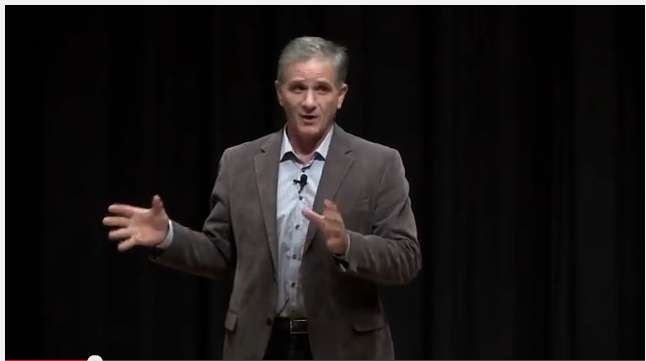
Bruce Vincent speaking at K-State as part of the Upson Lecture Series
If you weren't able to attend the Upson Lecture Series event featuring Bruce Vincent, which is highly unfortunate, but were still wanting to hear his message, I have great news for you!

The lecture is now available online on the Food For Thought YouTube channel - you can click over there and watch or you can view it below.

Thanks to everyone who helped make this event happen - specifically the K-State College of Veterinary Medicine classes of 1962 and 1966 for fully endowing the Upson Lecture Series. Sincere gratitude is also extended to Frontier Farm Credit and American Ag Credit for their generous role in bringing Bruce to K-State!


Friday, November 11, 2011

Fly Over States

I'm sure this song has been out for quite some time but since I'm in Australia I haven't been able to tune into many American country stations so incidentally I just heard it last week. For your listening pleasure:


 I love this song because it serves as a reminder of the importance of the farmers and ranchers who are producing a safe and affordable food supply in those fly-over states.

Additionally, Thanksgiving is just around the corner so remember to thank a farmer while you're carving up your Thanksgiving bird (or ham)..

Until next time,
~ Buzzard ~

Wednesday, July 6, 2011

Enjoy The Same Benefits as the Farmers who Produce Your Food

Guest Blog - Kevin Pearia, USDA - We welcome Kevin to the blog and are excited for his post that is very relevant information for consumers in rural America. Please enjoy!

Without farmers, families across the country would not be putting food on the table. Thousands of farmers—from cattle ranchers to dairy farmers—in the U.S. purchased their home with financing from the Rural Home Loan program. However, the program no longer requires borrowers to be farmers. Whether prospective homebuyers produce the food or serve at supper, a USDA loan may be the best home financing option.

When it took shape in 1987, the Rural Home Loan program was only for farmers. The federal government intended to fill a void in the home-financing market. Rural areas were lacking the credit needed to provide homebuyers with mortgages, so USDA loans were introduced. In time the program adopted changes to provide affordable mortgages to low- and middle-income families living in rural areas. Now, however, it is no longer a requirement of the program to be a farmer.

USDA loans come jam-packed with financial benefits. Without question, the most beloved feature is paying no money down. As long as the USDA deems the home reasonably sized for the family, it’s possible to get a loan worth 102 percent of the appraised value. The Rural Home Loan program does not have a purchase price maximum, either. The program comes with a 2-percent funding fee, which can be lumped into the total loan, hence 102 percent. There are more perks to USDA loans, such as:
  • -Fixed interest rates even for loans with 38-year lives
  • -No private mortgage insurance
  • -Lower closing costs than traditional loans
  • -Financing for a purchase, repair, construction, renovation or refinance
Nationwide, there are about 800 field offices serving people who want to buy a home in a rural area. Eligible properties must be in a rural area that meets the USDA’s requirements. Usually, such areas are in or near cities, townships or villages with fewer than 25,000 people. They also do not have enough credit per the USDA’s judgment. The department will also determine if a house hold can afford the loan’s principle, interest, taxes and insurance (PITI). USDA-lenders seek credit scores no lower than 620, and debt-to-income (DTI) ratios no higher than 41 percent. Eligible borrowers currently occupy inadequate housing for the size of their family and seek housing that is an appropriate size for their family.

Wednesday, April 6, 2011

Burnt Crisp


A farmer discs up ground near Satanta, KS on April 3, 2011. Photo by Kelvin Heitmann

A fire near my hometown threatened people, animals, farmground, structures and grassland this past Sunday. The town of 1200 was evacuated for safety reasons as the out of control grass fire approached.

Fire departments from nearby (up to 45 miles away) sent back up to assist our small town's volunteer emergency services. Another great example of volunteers came from local farmers who hooked up their tractors and began discing the ground close to town to turn the dry grass under and expose dirt that is less likely to burn.

Two cattle feeding lots, with capacities of over 126,000 head of cattle, were in danger during the fire, but were spared. Around 9,600 acres of ground including farm ground, pastures, CRP grasslands and golf course grasses were burnt. Three families lost their homes and thankfully no injuries have been reported.

The town of Satanta was very lucky considering the damage that could have been done from such a large fire that was so out of control. Many people have misconceptions about agricultural-related fires and I thought this would be a good time to bring those up!
In our part of the state, people DO NOT participate in elective burning of pasture ground. It is too dry and we can't afford to lose precious top soil to wind erosion. Many parts of Kansas do participate in such burning and that was talked about in this post. There are also some great photos and a description of pasture burning in the Flint Hills from a Kansas rancher, Debbie Lyons-Blythe, here! The exact cause of the fires that raged through Haskell County this past Sunday is unknown, but dry conditions and high wind speeds fueled it.
The battle farmers and ranchers from the Satanta area will be fighting in the months to come is all of the open ground that was exposed during the fire. Without grass and crops covering a large area of ground, when the wind blows it will erode the soil and make conditions much worse. The biggest thing we need right now is rain and a whole lot of it! As many of you already know, you can rebuild structures and replace things, but you can't restore the precious top soil that will be lost.

Tuesday, October 26, 2010

Cotton is King [Part 1]

This is part 1 of a 2 part post on Cotton as a crop, fiber product and food - Enjoy!

Back home, one of my favorite harvest seasons is underway. It's cotton picking season and the strippers are buzzing through the fields. To begin talking about Cotton, since it is a crop we might be less aware of, I thought it might be nice to explain how this crop gets from the farm to the consumer. Cotton is grown in 17 states and the U.S. is ranked third in world cotton production behind China and India. Texas begins harvesting cotton in late July and the season can go into late November in northern states.

This is what cotton looks like in a field when it is ready to be harvested. This is a field not far from my home near Satanta, KS.


Cotton is removed from the field by a machine called a cotton stripper. It is similar to the combines that harvest grains, but a little different. While the invention of the cotton stripper highly improved the process from the old days of picking cotton by hand, unfortunately for cotton producers, a cotton stripper also harvests a lot of foreign material too. Foreign material can consist of burs, sticks, fine leaf trash and soil particles. The more foreign material contained in the stripped cotton the more grade reduction and price loss at the gin.

This is a cotton stripper, running along side it is a boll buggy being pulled by a standard tractor.

Each little white ball you see in the field is referred to as a boll. Cotton is transferred from the stripper to the boll buggy. The boll buggy carries the millions of little cotton bolls to the edge of the field. The picture below depicts a boll buggy emptying into a module builder. The module builder sits at the edge of the field out of the way for the cotton stripper to continue stripping.

After the cotton is transferred into the module builder, it is compacted into a large module. Modules are formed to protect the cotton and as a way of storing the cotton until the gin is ready. One module is usually about 13-15 bales of cotton. One bale of cotton weighs around 500 pounds. In the last couple of years total US acres have averaged .6 bales per acre of cotton planted overall. My dad always hopes for "2-bale cotton" which means his goal is to harvest 2 bales per acre or 1000 pounds per acre. The picture below shows several modules of cotton sitting on the edge of a harvested field. The green tarps on top serve as protection from any rain or weather elements that the cotton might be subjected to. Large numbers are painted on the side of each module for identification, and when the gin is ready to take more modules in, a truck will come and pick up the modules and transport them one by one to the gin.

While producers in Kansas used to have to send their cotton to other states to be ginned, in the last decade a few gins have popped up in the southern part of the state. My family is fortunate to be a member of the Northwest Cotton Grower's Co-Op Gin. It is located near Moscow, KS which is a hop, skip and a jump away from my home town. We are in the Southwest portion of Kansas, but it is the Northwest area of typical cotton growing states.. When the gin was built it made cotton a more profitable crop for our area farmers because it greatly reduced the transportation costs involved with shipping modules south to Texas for ginning. Cotton is also profitable in our area because it requires a lot less irrigation than corn or milo and you can grow it in soil that isn't as superior.

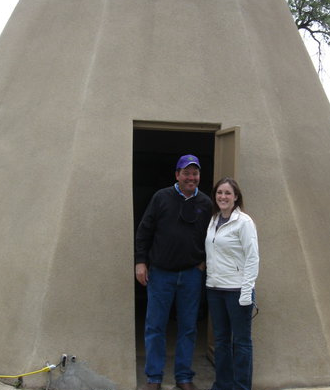
If you would like more information on Cotton in the U.S. the best website to refer to is the National Cotton Council of America. I got a lot of my information off of their website and also from my dad. He is a third generation farmer and a second generation cotton grower. His farm is currently harvesting the cotton crop and they are pretty excited because cotton prices are good right now. Here is a picture of my dad and I in my home town, Satanta.


Stay tuned for Part 2 of Cotton is King. Cotton is normally thought of as a fiber product, and a darn good one at that! One bale of cotton can produce 1,217 men's t-shirts! The upcoming post will be more about how cotton can be and is utilized as a food product.

Tuesday, June 15, 2010

Ninety Five

Corn Farmers Coalition has released a new ad. It's aim? To put a face on farmers. 

Most American farms are owned by families. More specifically, 95% of corn farms are family owned. The mission to spotlight these family farms comes at a time when it is important for consumers to understand that corporate farming is more of a myth than a reality. 

“They aren’t some myth, but are a critical economic engine that provides most of the food, feed and fiber produced in this country,” said Darrin Ihnen, president of the National Corn Growers Association. “This awareness is important to our survival."

Sometimes I wonder where the idea of corporate farming and big agriculture first began. Many farms that I know of are actually "incorporated" for the tax advantages only. Behind that label, is a hard working family of dedicated agriculturists. 

Family farmers deserve a face that is honest, realistic and shows the world exactly where food is being produced. A friend of mine did an excellent job of literally painting faces for farmers in this recent post. Just look at her photos and you can see the years of diversity, generations of pride, and hours of hard work it takes to keep the family farm up and running. 

Ninety five. I'm proud to be a part of that percentage of American Farmers!

Tera Rooney

Friday, May 7, 2010

Preserve the Locals

On a recent trip to Fort Collins, CO for a research trial, I stopped in to La Luz, a local restaurant specializing in fresh Mexican food with a kick.  While standing in line and trying to decide between fish or carnitas tacos (carnitas on corn tortillas won; they were fantabulous), I came across a flier for The 3/50 Project.  The 3/50 Project is striving to preserve locally owned restaurants and businesses, such as La Luz, by encouraging consumers to spend $50 at 3 independently owned businesses once a month.  A strong incentive to follow the program is that

 for every $100 spent locally, $68 goes back to the community in the form of taxes, payroll and other expenditures. This money helps keep local economies strong. 

 I come from the small town of Colony, KS that boasts one of the best restaurants in SEK - The Country Diner.  It's comforting to think that everytime I buy a pork tenderloin, mashed potatoes and iced tea from "The Diner" I am helping strengthen the community's economy. 

I'm not suggesting that you completely swear off large chains, I'm merely suggesting that you contribute to the "Little Man" that may exist in your hometown.  Independently owned restaurants are often diamonds in the rough and hopefully they'll be around for many years to come.  If you're ever in SEK, I encourage you to drop into The Diner, sit a spell and enjoy the company and fare.

Until next time,
~Buzzard~

Thursday, April 22, 2010

Earth Day in SEK

Hello blogging fans! I hope you all celebrated Earth Day by taking out the recycling and sharing how farmers practice environmentally friendly production methods every day.  Recently, I attended the Master's of Beef Advocacy Commencement that took place on the KSU campus.  Daren Williams, Exec. Director of Communications for NCBA, encouraged all participants to submit letters to the editor about how Earth Day is everyday for farmers.  I sent my letter in to the newspaper in the closest town, Garnett (my hometown of Colony, KS, population 343, doesn't have a newspaper) and unfortunately it wasn't printed.  However, I figured someone should read it so I've posted it below! Happy reading!

Dear Editor:
The 40th Anniversary of Earth Day is fast approaching and I decided to take it upon myself to compile a list of environmental practices I, and fellow agriculturalists, do to preserve our environment.
- Provide a habitat for Kansas’ wildlife in our green, grassy pastures
- Graze our cattle on grass for as long as possible to preserve and oxygenate topsoil
- Recycle the constant flow of Dr. Pepper cans that accumulate in the feed truck
- Efficiently raise beef on land that is otherwise not viable for crop production
- Convert some of the waste products created by my animals (cattle, horses) to make compost for my backyard vegetable garden
- Utilize the best management livestock production practices that have been passed down from generation to generation in order to allow us to do more with less
- Adopt new technology as it comes along to reduce our carbon footprint
This is far from the entirety of the environmental initiatives farmers exemplify. However, it’s the daily ‘go green’ practices that farmers, ranchers and agriculturalists exhibit everyday that will allow our children and grandchildren to enjoy the same blue skies and green grass in their childhood that we were so fortunate to experience.
I’ll leave you with this line from the old Alabama song Pass it on Down, “So let's leave some blue up above us; Let's leave some green on the ground; It's only ours to borrow, let's save some for tomorrow; Leave it and pass it on down.” Happy Earth Day!


Until next time,
~Buzzard~

Wednesday, March 24, 2010

The urban consumer, rural producer gap

This was on the front page of USA Today :


I think one of the biggest challenges for our generation of agriculturists is connecting with an increasingly urban group of consumers and politicians. The average person today is 2 generations removed from the farm and this number is going to continue to grow. At the same time, people are wanting to know more about the food they are eating than ever before. I think it will be up to agriculturists to reach out and make this connection, especially over the Internet.

LinkWithin

Related Posts with Thumbnails