Search This Blog

Showing posts with label hunger. Show all posts

Monday, January 30, 2012

Technology Has Brought Us A Long Way

I am not a very tech-savvy person. At all. I still don't know how to use Bluetooth and that's been around for about 8 years, maybe more? Anyway, just because I don't understand it doesn't mean I don't appreciate it. Technology has made it easier for parents to teach their children the ABC's at young ages, has improved health care, has globalized  industry and in general has improved our quality of life (although the occasional IT headache does occur). Additionally, technology has made agriculture immensely more productive over time.

What do I mean? Think about it - in the 60's and 70's Norman Borlaug and his associates created new varieties of corn, rice and wheat that vastly improved the amount of food farmers could produce. In some countries of the world, for example in East Africa, food intake went up by 50%. This was achievable with the application of technology.

In his annual letter, Bill Gates highlights these facts and others about the need for technology to feed our growing world. That's right, Bill Gates has gone agvocate. Well, not really but he does make a great case for our industry.

Bill points out that in the 19th century, the majority of the U.S. workforce was in agriculture. Today, less than 2% of people are responsible for all U.S. food production however, in countries like Uganda 75% of the citizens produce the food. U.S. farmers are so productive that the average family spends less than 10% (8.9% in 2009) of their annual income on food. That is a microscopic amount compared to a country like China who in 2009 spent 37% of their income on food.

It's also brought to attention that only $3 billion a year is spent researching the seven most important crops. This amount needs to increase for the sake of our productivity - especially as our climate continues to change which could cause a 25% decrease in the crop yield if we continue to see droughts and floods like this past year. Research into soil science and crop production can help us to be more efficient with our resources, which is especially important with climate change, urbanization and our growing world population. He suggests we need to increase that amount if we want to be able to meet the demand for food over the next 50 years

Before I close, I'd like to share this picture with you. A little Food For Thought, if you will (cliche, I know):

With this picture I'm not trying to say taxes are high, I'm pointing out the extreme affordability of our food supply. We are very blessed in the states to have such 'cheap' food that has been brought about through research, hard working farmers and technology.

Until next time,
~ Buzzard ~

To read Bill Gates full letter, click here. Photo credit from here

Tuesday, December 13, 2011

The Very Best Christmas Gift

The very best gift this holiday season for many people will be nourishment. According to the FAO, 1 billion people currently go hungry.

In the US, if we could spend more of the money that goes towards fighting the anti-agriculture movement and produce synergistic efforts that move forward to solve important industry issues, we could make a dent in that 1 billion. I encourage you to check out this facebook group to get involved in the End Hunger Project.

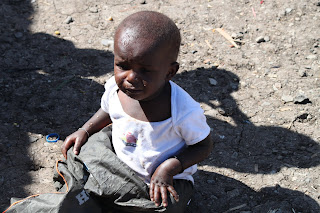
This Christmas, I am thankful for the very best gift I have ever received:

I was raised on a farm in a family passionate about serving the agriculture industry.

And that is why I'd like to share this with you. 

This is an important regulation that the US Department of Labor has proposed. I encourage you to be educated on both sides of the issue and would love to engage in conversation about your opinions regarding it. I have worked on my family's farm and ranch since before I can even remember. Some of my first memories of being on the farm with my dad include learning important safety precautions that HAD to be taken while we were outside.
The website you can visit to view the regulation is listed in the above photo. I'd love to hear from you in the comment section below!


Best, 

Tera

Thursday, September 22, 2011

Help Us Swipe Out Hunger

We are participating in an exciting event where we will be packaging meals that will be sent to the Horn of Africa to help feed thousands of malnourished people. The Kansas State University Goal is to package 50,000 meals.

Do you want to help out? E-mail ksfoodforthought@gmail.com to express interest in donating towards our group's goal. It costs $0.30 to package one meal and our goal is to package - A LOT OF MEALS!

Numana, Inc., is partnering with students at Kansas State University for this epic philanthropic event. I am excited to be a part of such a humane, proactive event that will help those less fortunate. 

Tuesday, August 23, 2011

Obesity Epidemic

In following up with Brandon's recent post about the tragedy that is hunger occurring around the world, there's a polar opposite issue that many are dealing with here in the US.

OBESITY

It's a human health epidemic and it's amazing to me that you can travel 6 hours in a plane in any direction and witness the two situations. Gives new meaning to feast or famine.

Check out this website put out by the CDC. You can literally push "PLAY" on the map and watch Americans become more and more obese. http://www.cdc.gov/obesity/data/trends.html

Best Regards,

Tera Rooney

Wednesday, August 17, 2011

Hunger in the Horn


There is a thing in this world called hunger and it’s not something that most Americans deal with on a regular basis. There are 925 million undernourished people in the world today. That means one in seven people do not get enough food to be healthy and lead an active life. Hunger and malnutrition are in fact the number one risk to health worldwide — greater than AIDS, malaria and tuberculosis combined. We have taken for granted that when we go to the grocery store there will be food on the shelf. We no longer know where our milk, eggs, produce, bread and meat come from – as far as we are concerned they come from the store. We are out of touch. So what would we do if we went to the store and there wasn’t any food on the shelf? Go without eating? Are you kidding me?

If you’ve been keeping up on current events you know that there is a drought of horrific proportions going on right now in the African Horn. Somalia, Ethiopia, and the northern region of Kenya have been hit the hardest. There are over 1500 new refugees coming out of Somalia and into Kenya every day; this doesn't include the thousands who are going into Ethiopia. Almost 30,000 children under the age of 5 have already died of starvation, and it’s estimated that 12 million people are fighting for survival. I heard a story of a mother having to leave one of her children to die on the roadside in order to save the life of her other child on the 80 km walk to the Kenyan refugee camp – and that’s just from the border to the camp; she probably had to walk double that to get to the border from the Somali countryside. In another example from one of my Kenyan friends, he had to rescue a baby who was still clinging to life in the arms of her dead mother. You may not believe this, but it’s true – they are in a desperate situation and there is no end to it in sight.

There is food relief that is being made available to the refugees. USAID has invested 564,459,389 dollars in aid and private donors and NGOs (non-governmental organizations) are working tirelessly in an effort to get food supplies to this region. Organizations like NUMANA, based in Kansas, are taking an active role to try and engage in food aid relief. The trouble is that this is a temporary fix. What these countries need is greater investment in research and development of agriculture. More investment must be made in crops and growing practices that can better serve this type of environment – the same kind of research that allows America to have the most abundant food supply in the world.

I will be boarding a plane on Sunday to Nairobi, Kenya with my friend and coworker, Tyler Lund – we both work for Senator Moran. The Senator sits on the Hunger Caucus, so this cause strikes close to home both personally and professionally. Tyler has lived extensively in Kenya and is an expert in African agriculture and African production practices. During our time in Kenya we will be meeting with NGOs, government agencies, and refugees to identify current problems with the aid structure. There is also an opportunity for us to facilitate food aid ourselves. We are going to be working trough an NGO called First Love International to deliver food to the Dadaab refugee camp, which is currently housing around 417,000 people.

So when you eat dinner or go to the store this week, think about this: we are blessed. We are blessed with technology and production practices that allow us to feed a nation. We must continue to invest in agriculture if we are to feed a world. We aren’t doing it now, and the population is growing larger by the day – there is expected to be 9 billion people on this earth by 2050.

If you would like to get involved or learn more you can contact me or check out the links below.


Sincerely-

Brandon


http://www.usaid.gov/

http://firstloveinternational.com/

http://www.numanainc.com/


People Requiring Humanitarian Assistance in Kenya 3.7 million U.N. Agencies – July 29, 2011

People Requiring Humanitarian Assistance in Ethiopia 4.8 million U.N. Agencies – July 29, 2011

People Requiring Humanitarian Assistance in Somalia 3.7 million U.N. Agencies – July 29, 2011

People Requiring Humanitarian Assistance in Djibouti 165,000 U.N. Agencies – July 29, 2011

Number of Somali Refugees in Kenya 476,808 UNHCR1 – August 3, 2011

Number of Somali Refugees in Ethiopia 159,871 UNHCR – August 5, 2011

Monday, June 6, 2011

Thrown Out With the Bathwater


I was astounded to see the figures of a new study released by the U.N. Food and Agriculture Organization (FAO) and the Swedish Institute for Food and Biotechnology (SIK); their findings suggest that 1/3 of the food produced in the world for human consumption is LOST or WASTED! Working to decrease this loss is definitely critical to the current and future stabilization of global food supply. Click Here to read more.

Thursday, March 24, 2011

Food Insecurity

Food insecurity is a major problem in the world and even in our country. I sometimes fall to the naivety that the US doesn't have as big of a hunger issue since we produce so much of the world's food supply.

What does it mean to be food insecure? The USDA puts it simply in saying that it is the lack of access to enough food to provide for a healthy and active lifestyle. Food insecure households are not necessarily always in such a state. In one family it could mean that during a month they had to make the choice to pay for medical bills rather than spending that money at the grocery store.

Feeding America is a pretty neat organization that is working to reduce the amount of food insecure people right here in America. With the Map the Meal Gap tool on their website you can see exactly how many people are food insecure in your home county. I think the numbers will actually surprise you in some cases!

The population is growing and this problem won't be easy to overcome. I choose to support agriculturists because they are working hard to feed the world.

Go check it out and tweet about the #mealgap interactive tool from your account! Remember to follow us on twitter also - @fftgroup

Best,

Tera


Wednesday, February 9, 2011

Hunger doesn't take a day off and neither do cattle ranchers

We've had some crazy weather in Kansas over the last week. Both K-State and Washburn Law were closed for two days last week due to snow and ice. Even the legislature shut down for a couple days. However, cattle ranchers didn't get any time off. They were outside working hard to take care of the livestock, especially those who had cows calving.

Hunger doesn't take a day off either. Below is a video of Kansas rancher Debbie Lyons-Blythe thanking JBS for donating 16,000 pounds of beef to the Food Bank of the Rockies.


So next time you're inside snuggled up by the fire with a bowl of soup and it's snowing outside, think about the sacrifices America's farmers and ranchers made to make that soup possible. Also think about those who are hungry and even homeless and how much harder the weather is on them.

Just some food for thought,
Chelsea


LinkWithin

Related Posts with Thumbnails